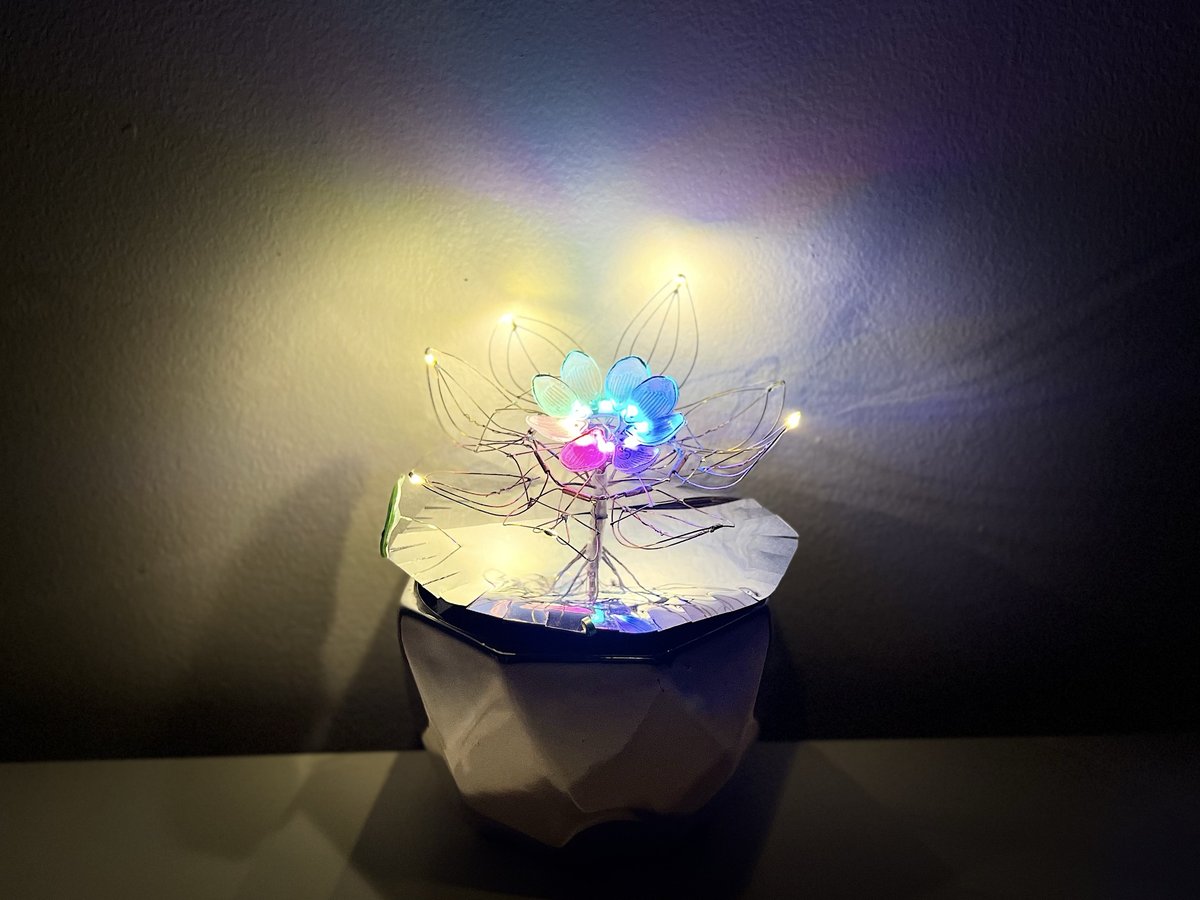
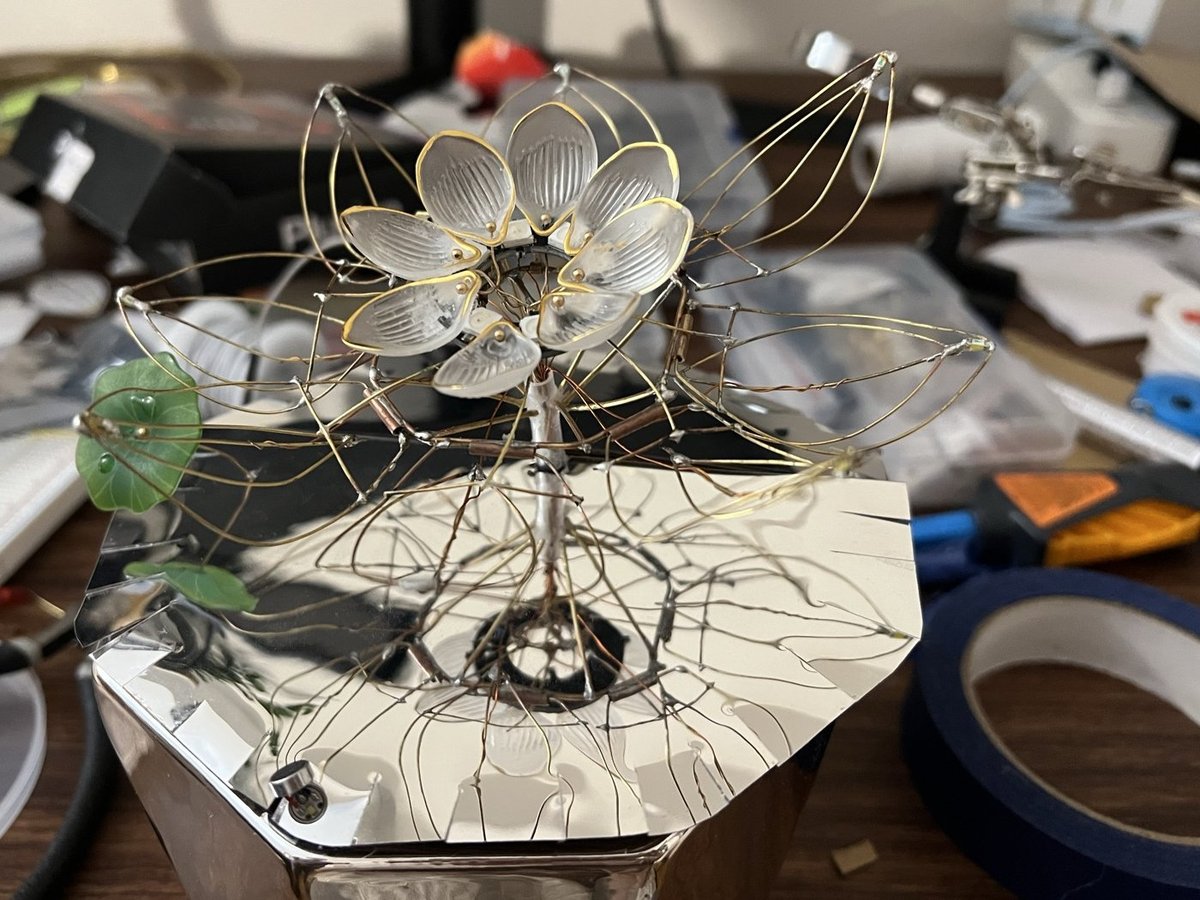
In 2022 Fall, I took Applied Gadgets, Sensors and Activity Recognition in HCI (05-833). For the final project, I spent two weeks building a mechanical lotus that lights up and blooms when you blow on it, and plays music when you touch its leaf.
The idea came from the Ever-Blooming Mechanical Tulip. My version adds sensors so the flower responds to people:
- Blow on the flower (airflow sensor) → it lights up (SMD LEDs & NeoPixel RGB) and opens (servo motor);
- Touch the leaf (TTP223 touch sensor) → it plays music (speaker) and changes colors (NeoPixel);
- A coroutine library keeps the lights, music, and motor running at the same time.
The build went from sketching the petals, to the flower skeleton and mechanics (with a lot of brass soldering), to LED wiring, servo mechanics, putting everything together in code (and even more testing), and finally packing it all into a pot with a battery so it works without a laptop. That’s also when things started to break :(
Design sketch |
Soldering the skeleton |
|---|---|
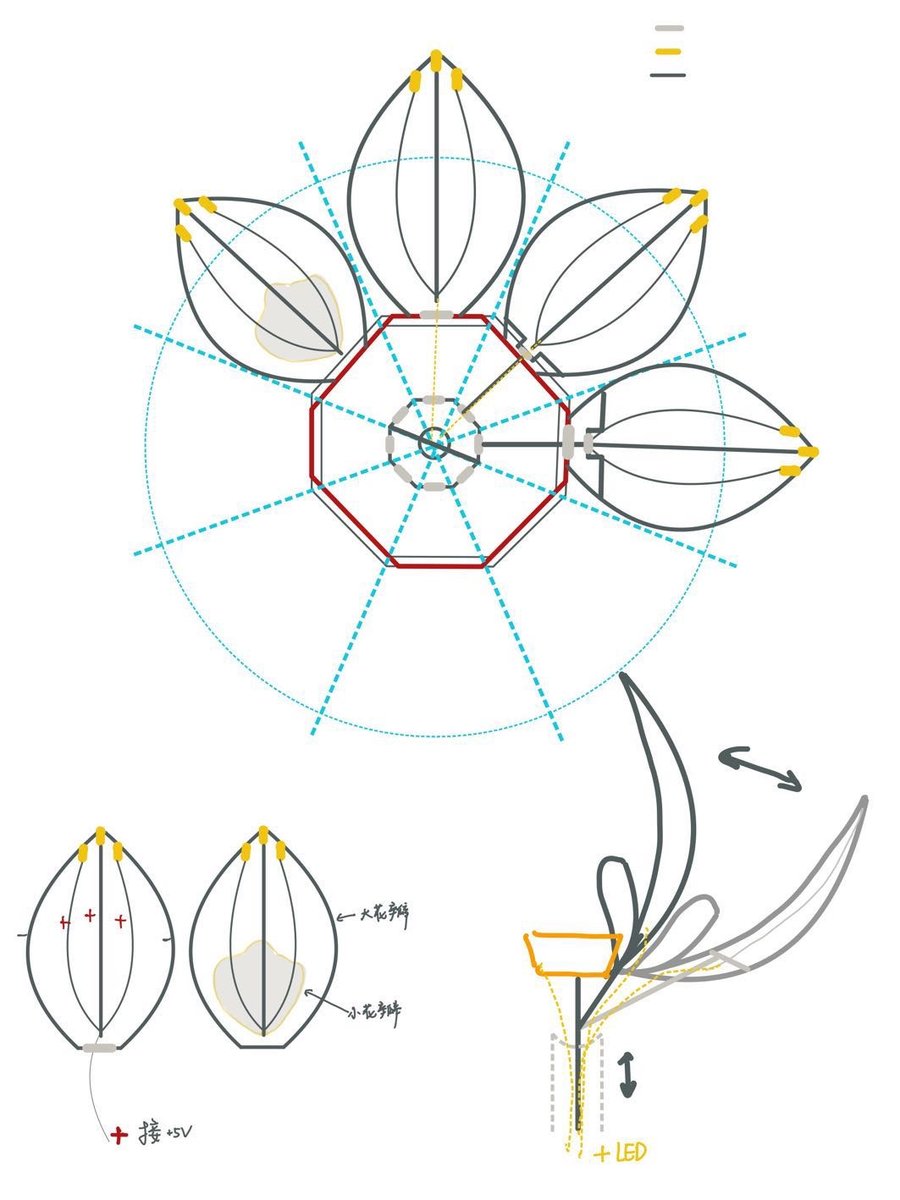 |
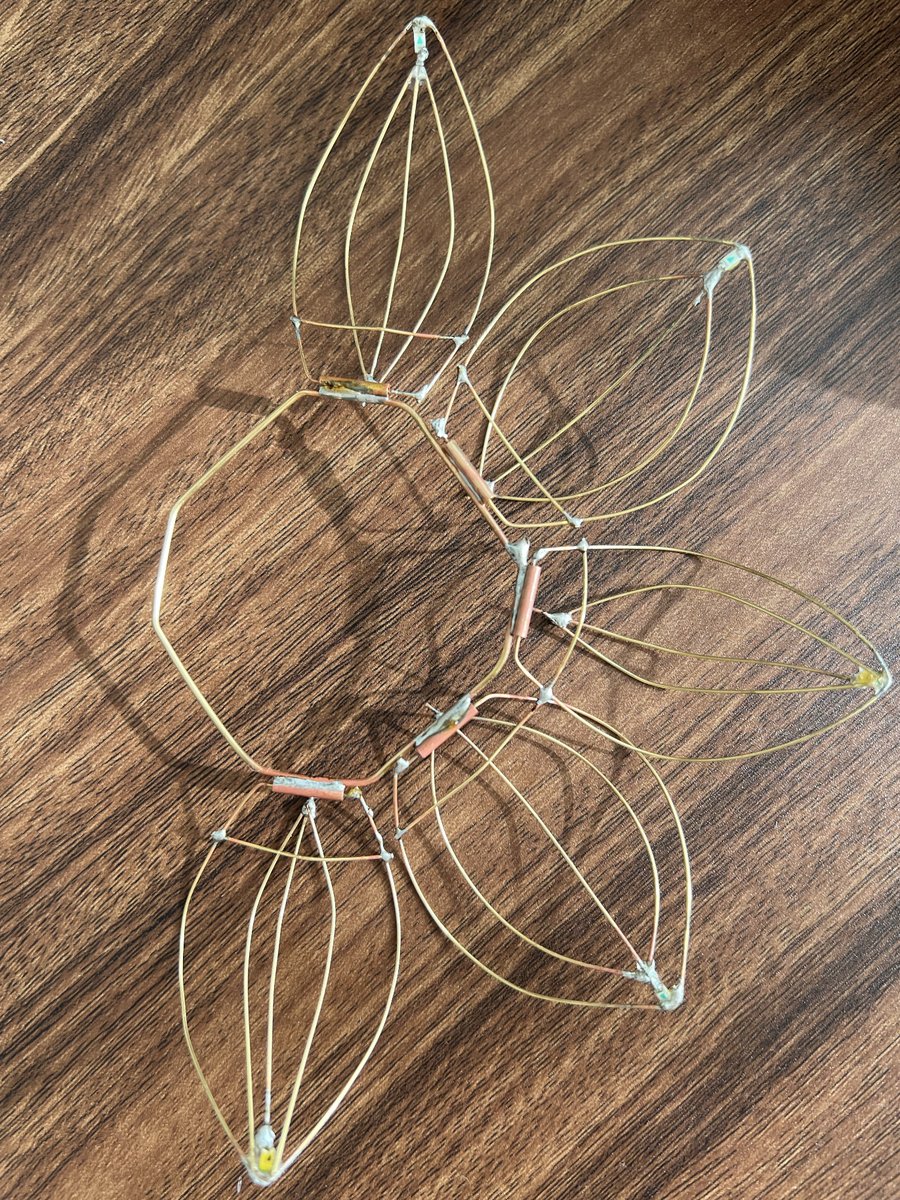 |
LED wiring & testing |
Packing into a pot |
|---|---|
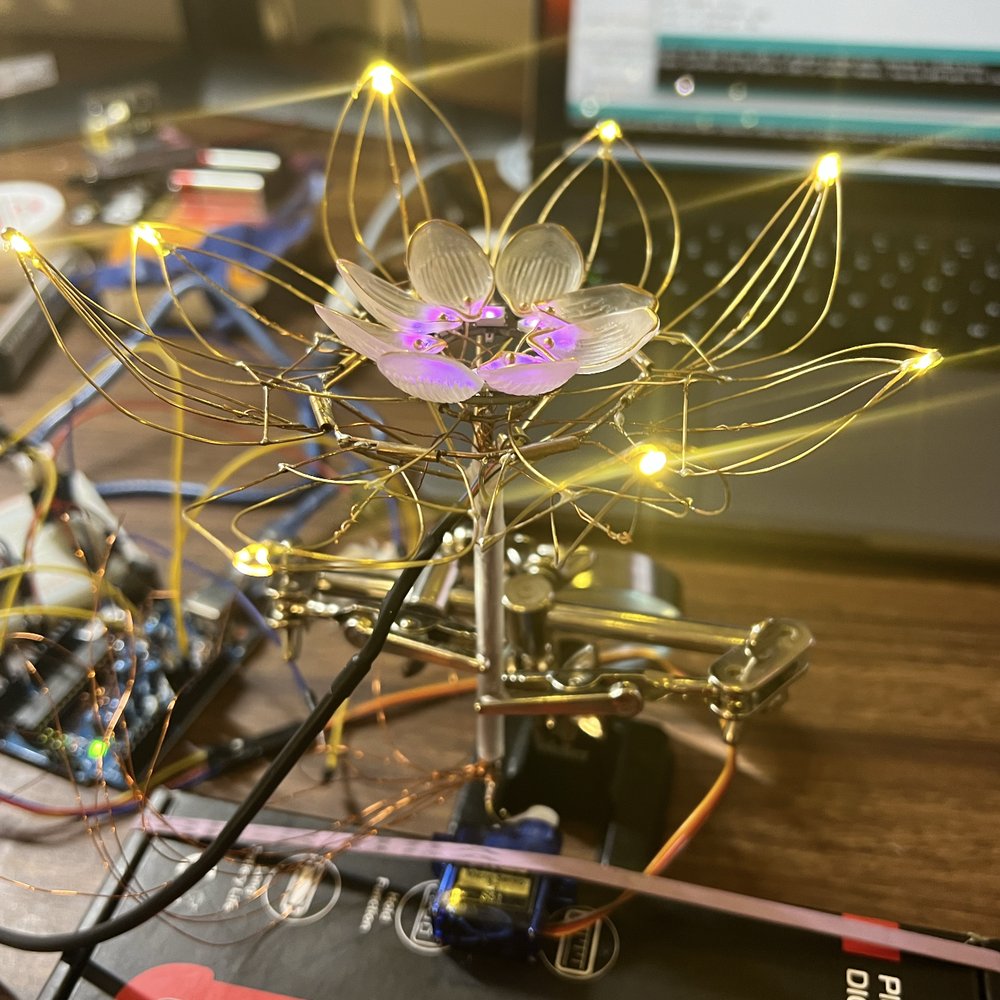 |
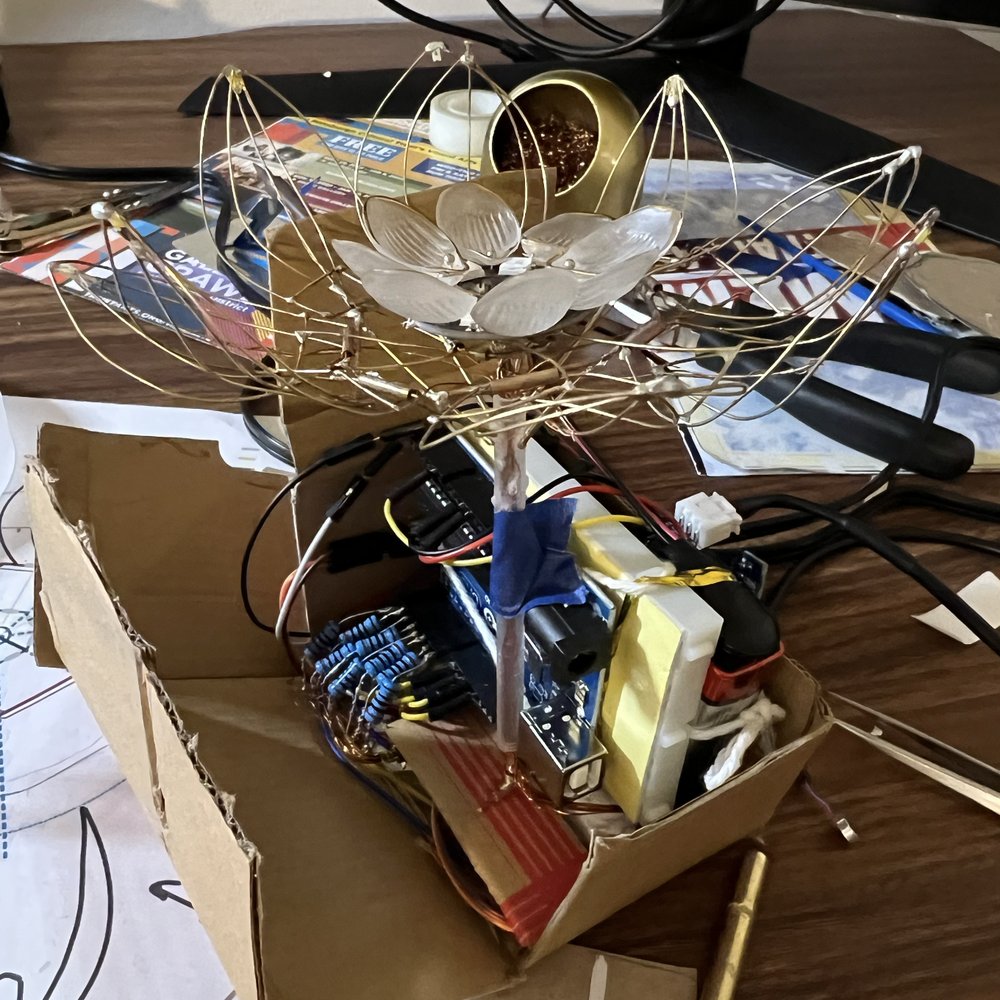 |
Final product (night) |
Final product (day) |
|---|---|
 |
 |
This class really pushed me: in two weeks I burned through two breadboards and three Arduinos, and re-soldered countless petals that fell off 💔. My deepest respect to all mechanical engineers 🫡 Hardware debugging is hard! I’d rather write code any day 🥲